Research evaluating IPAM, indolepropionamide, and mitochondrial energy metabolism as a foundation for further scientific investigation
Program typePreclinical research
Research focusMitochondrial biology
Evidence levelExperimental, non-human
Next catalystEvidence review and replication strategy
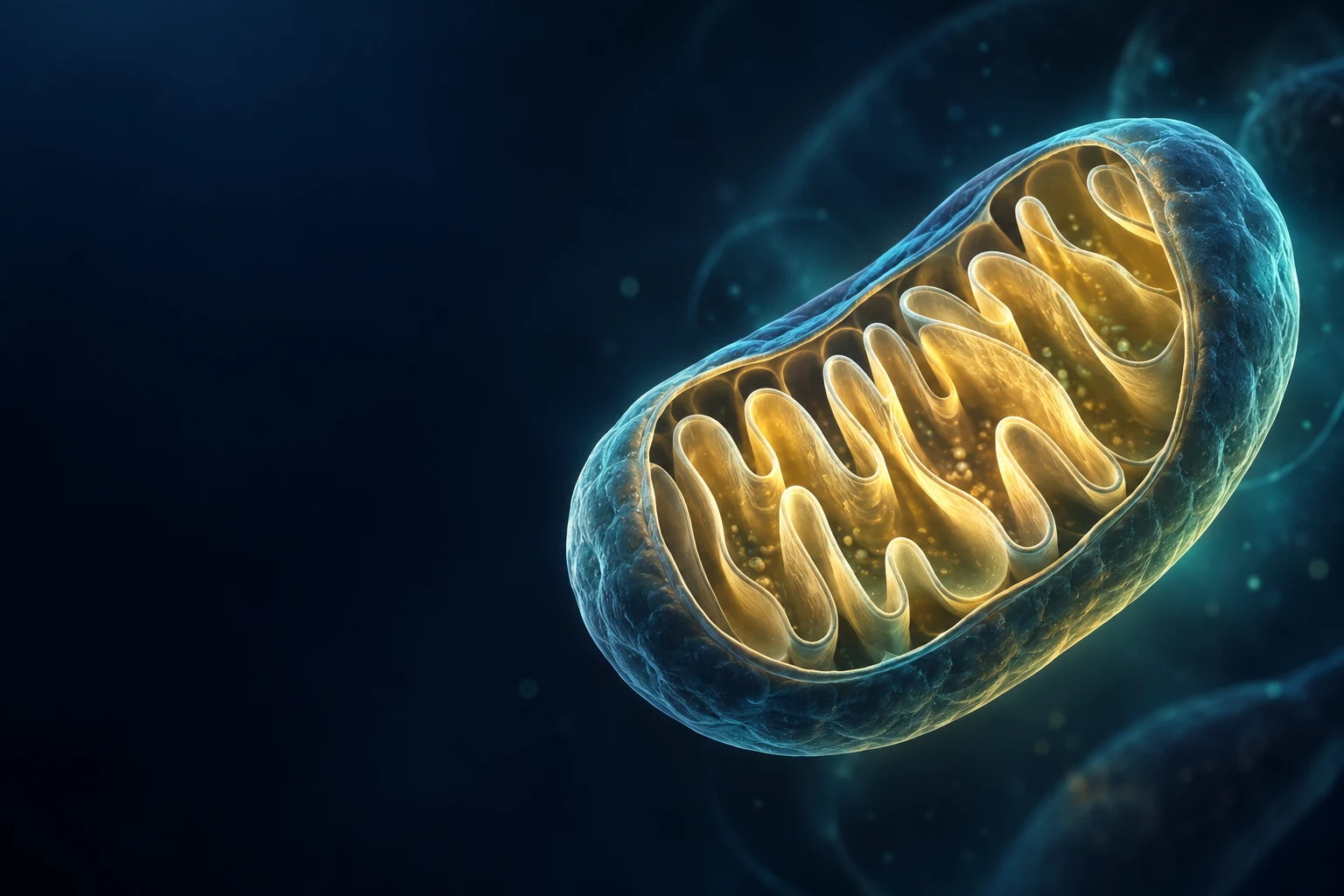
Mitochondrial energy production
IPAM + IPA → proton flow → ATP
Illustrative proposed mechanism. IPAM: violet · IPA: cyan · H⁺: gold · ATP: green. Combined effects, binding locations and increased ATP output are artistic interpretations, not measured results.
Do the reported experimental findings support a reproducible, protectable, and developable biomedical program?
Potential clinical applications
PROPHANOS is investigating whether its mitochondrial research candidates could restore impaired cellular energy production. Potential applications include age-related muscle dysfunction, selected inherited mitochondrial disorders, and neurodegenerative diseases in which mitochondrial dysfunction contributes to disease.
These are research opportunities, not established uses. Any potential to prevent or treat disease would require evidence of improved ATP production and respiratory efficiency, cellular benefit without increased oxidative injury, and meaningful functional improvement at achievable tissue exposure.
Development objective
Restore impaired mitochondrial energy production to improve function in a defined disease population.
PRODUCT RATIONALE
Why mitochondrial biology
Mitochondria influence cellular energy, stress responses, and resilience. These broad biological roles provide a research rationale, not evidence of a human therapeutic or longevity effect.
NEXT EXPERIMENT
Preclinical replication and program definition
The next scientific work must distinguish reported experimental findings from mechanism hypotheses, establish reproducibility, and determine whether a defensible development path exists.
What remains under investigation
Demonstrated observations, development hypotheses, and unknowns are kept distinct.
PRECLINICAL FINDING
Mitochondrial function
Published experimental work reported protection of mitochondrial function in rodent preparations. Relevance to human treatment remains unknown.
RESEARCH HYPOTHESIS
Cellular energy metabolism
Effects on energy metabolism and cellular resilience require direct, reproducible measurement in appropriate experimental systems.
PRECLINICAL RATIONALE
Oxidative stress
Oxidative-stress biology may contribute to the research rationale, but no clinical antioxidant or protective effect is established.
NON-HUMAN OBSERVATION
Organism lifespan
Published lifespan extension was reported in rotifers, microscopic aquatic animals. It is not evidence of longevity benefit in people.
EVIDENCE STATUS
No established human longevity evidence
The cited work is preclinical and does not establish safety, efficacy, disease modification, mitochondrial benefit, or lifespan extension in humans. No human therapeutic claim is made for this research program.
Development path
Any advancement requires independent review of the published evidence, experimental replication, IP assessment, candidate definition, and a development plan appropriate to the resulting data.
Cryo-EM structural research · Complex I representation · PDB 6ZKC
PROPHANOS mitochondrial research record
Internal hypothesis and program-assessment record · not clinical evidence
INVESTIGATIONAL QUALIFICATION
This is a preclinical research program. No investigational product has been shown to improve mitochondrial function, prevent disease, or extend lifespan in people.